

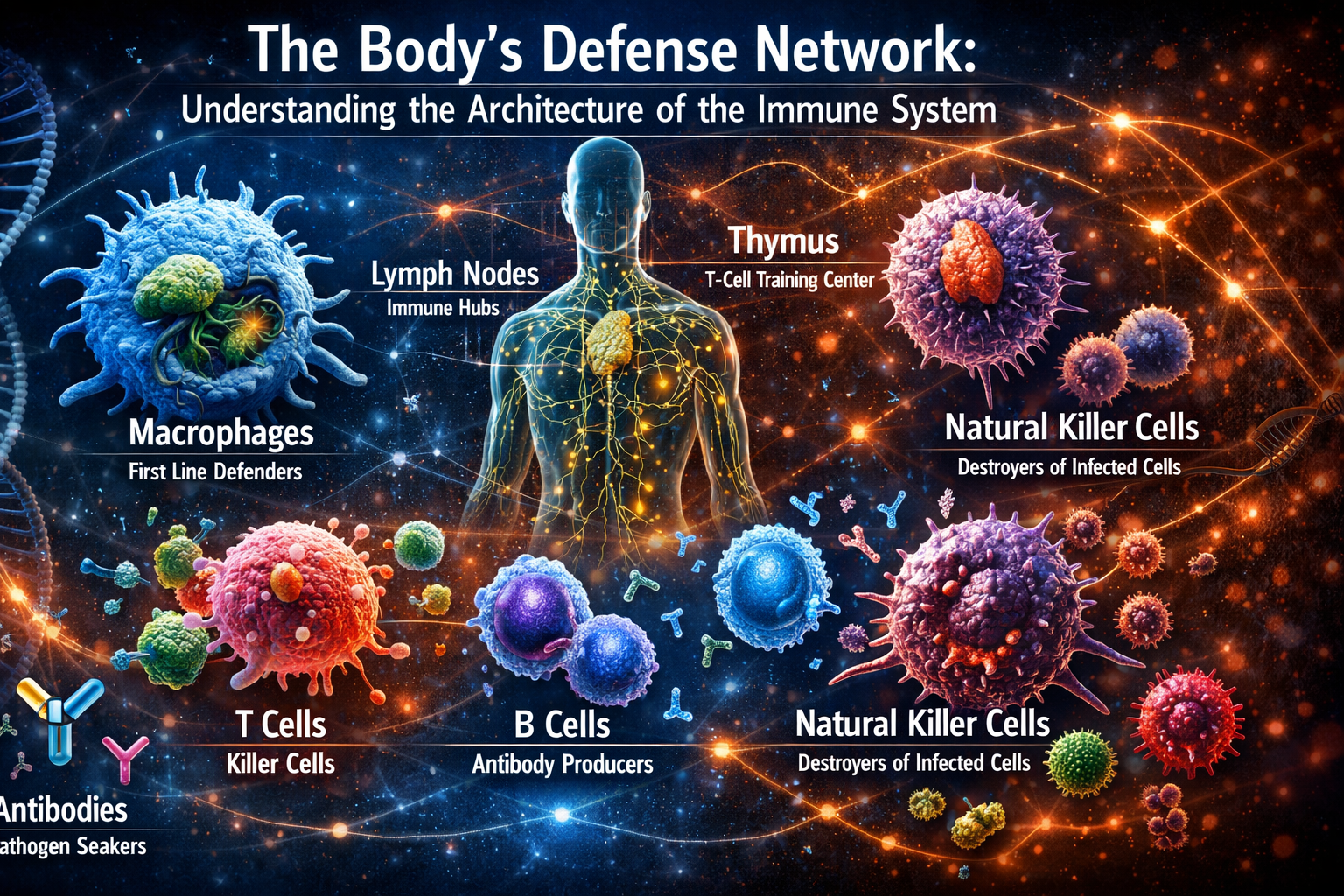
The human immune system is not a single organ. It is a coordinated network of cells, tissues, and signaling molecules working together to protect the body from potential threats. To understand how it functions, it helps to think of it as a layered defense system designed for both speed and precision.
At the front line is the innate immune system. This is the body’s immediate response mechanism. It reacts quickly to common patterns found in bacteria, viruses, and other foreign substances. Physical barriers such as the skin and mucous membranes are part of this first layer. If a pathogen crosses these barriers, immune cells such as macrophages and neutrophils move in. These cells identify general features shared by many microbes and attempt to neutralize them.
The innate response is fast but not highly specific. That is where the adaptive immune system comes into play. Unlike innate immunity, adaptive immunity is highly targeted. Specialized cells called B lymphocytes and T lymphocytes recognize specific molecular structures, known as antigens. Once activated, B cells produce antibodies tailored to bind to a particular antigen. T cells help coordinate the immune response or directly eliminate infected cells.
A key feature of the adaptive immune system is memory. After an infection, certain B and T cells remain in the body as memory cells. If the same pathogen appears again, these cells allow the immune response to activate more quickly and efficiently.
Communication is essential throughout this process. Immune cells release signaling molecules called cytokines that help regulate the intensity and duration of the response. Too little response can allow infections to spread, while too much can lead to excessive inflammation.
Understanding the architecture of the immune system reveals its balance between speed, specificity, and regulation. Rather than being a single reaction, immunity is a coordinated process shaped by evolution to maintain stability within a constantly changing environment.