

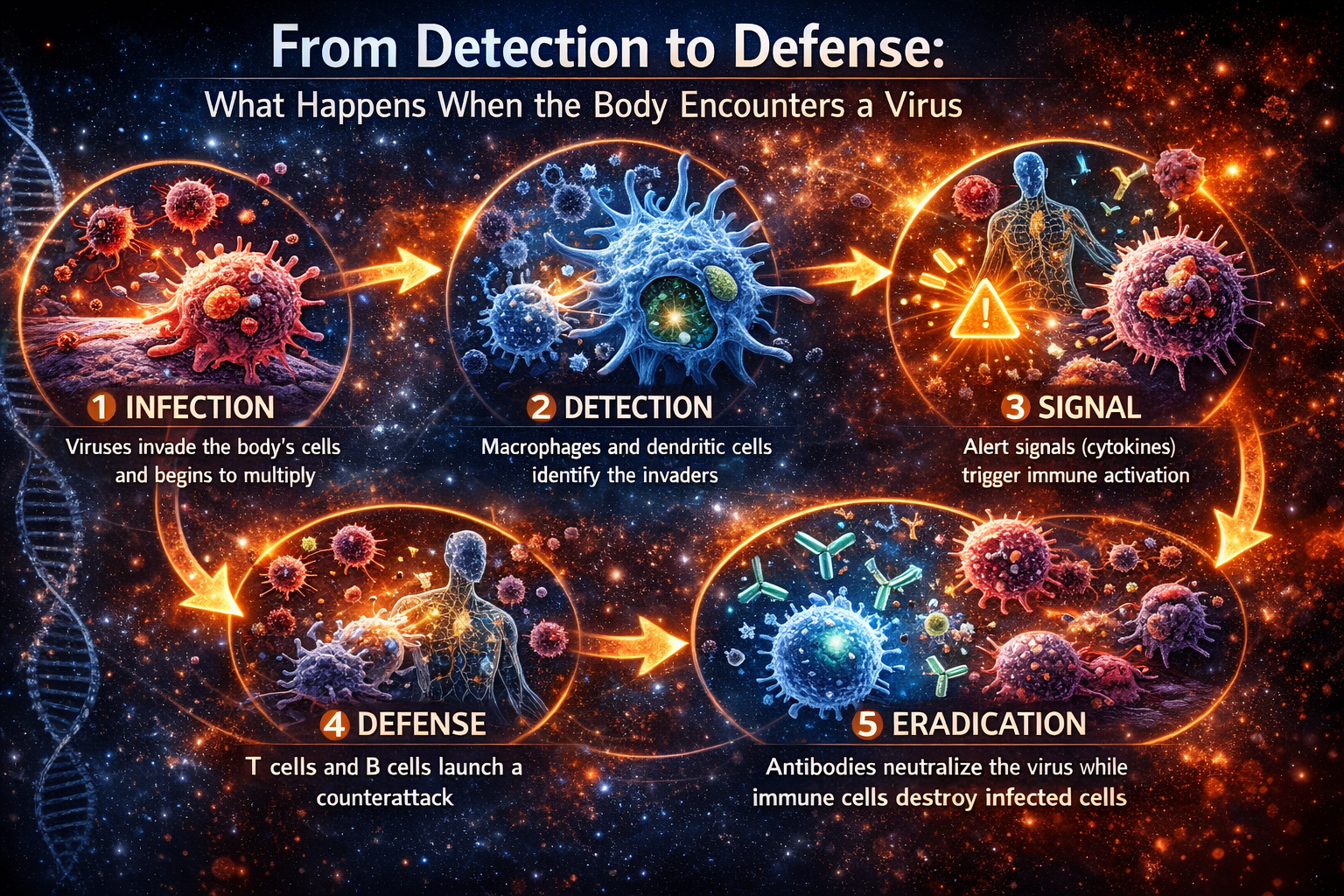
When a virus enters the body, a complex sequence of events begins almost immediately. The immune system must detect the intruder, assess the threat, and activate an appropriate response — all while minimizing damage to healthy tissues.
The process starts with recognition. Cells in the innate immune system are equipped with receptors that detect common molecular patterns associated with viruses. Once identified, infected cells release chemical signals that alert nearby immune cells. This signaling helps recruit white blood cells to the site of infection.
Inflammation is often part of this early response. Blood vessels expand slightly to allow immune cells easier access to affected tissues. While inflammation is sometimes associated with discomfort, it is a controlled and essential component of the defensive process.
If the infection persists, the adaptive immune system becomes more involved. Dendritic cells, which act as messengers, present viral fragments to T cells in lymph nodes. This presentation activates specific T cells that can identify and destroy infected cells. Meanwhile, B cells begin producing antibodies that bind to viral particles, reducing their ability to enter new cells.
Antibodies also mark viruses for destruction by other immune cells. Over time, the immune system clears most infections through coordinated action between multiple cell types.
An important outcome of this process is immune memory. After the virus has been eliminated, some immune cells remain prepared for future encounters. This allows for a faster and more efficient response if the same virus appears again.
The immune response is not simply about elimination. It is about regulation. The body must carefully control the intensity of the response to prevent excessive inflammation. Successful immune protection depends not only on activation but also on proper resolution once the threat has passed.